
Minimum Distance to Type a Word Using Two Fingers
HardPrompt
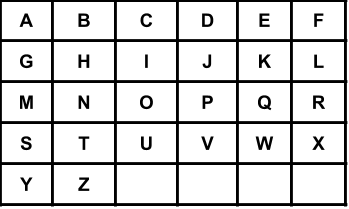
You have a keyboard layout as shown above in the X-Y plane, where each English uppercase letter is located at some coordinate.
- For example, the letter
'A'is located at coordinate(0, 0), the letter'B'is located at coordinate(0, 1), the letter'P'is located at coordinate(2, 3)and the letter'Z'is located at coordinate(4, 1).
Given the string word, return the minimum total distance to type such string using only two fingers.
The distance between coordinates (x1, y1) and (x2, y2) is |x1 - x2| + |y1 - y2|.
Note that the initial positions of your two fingers are considered free so do not count towards your total distance, also your two fingers do not have to start at the first letter or the first two letters.
Example 1:
Input: word = "CAKE"
Output: 3
Explanation: Using two fingers, one optimal way to type "CAKE" is:
Finger 1 on letter 'C' -> cost = 0
Finger 1 on letter 'A' -> cost = Distance from letter 'C' to letter 'A' = 2
Finger 2 on letter 'K' -> cost = 0
Finger 2 on letter 'E' -> cost = Distance from letter 'K' to letter 'E' = 1
Total distance = 3
Example 2:
Input: word = "HAPPY"
Output: 6
Explanation: Using two fingers, one optimal way to type "HAPPY" is:
Finger 1 on letter 'H' -> cost = 0
Finger 1 on letter 'A' -> cost = Distance from letter 'H' to letter 'A' = 2
Finger 2 on letter 'P' -> cost = 0
Finger 2 on letter 'P' -> cost = Distance from letter 'P' to letter 'P' = 0
Finger 1 on letter 'Y' -> cost = Distance from letter 'A' to letter 'Y' = 4
Total distance = 6
Constraints:
2 <= word.length <= 300wordconsists of uppercase English letters.
Approaches
3 approaches with complexity analysis and trade-offs.
This approach uses recursion with memoization, which is a top-down dynamic programming technique. It's a direct translation of the problem's recursive structure. The state of our recursive function is defined by the current index in the word we need to type, and the current positions of the two fingers. While intuitive, this method is not the most efficient due to its large state space.
Algorithm
- Create a helper function
getPos(char c)to get the (x, y) coordinates for each character on the 6-column keyboard layout. - Create a helper function
dist(char_idx1, char_idx2)to calculate the Manhattan distance. If one of the indices represents the initial "free" state (e.g., index 26), the distance is 0. - Create a 3D array
memo[word.length()][27][27]for memoization, initialized with a value indicating that the state has not been computed. - Implement a recursive function
solve(index, pos1, pos2):- Base Case: If
indexreaches the end of the word (word.length()), it means all characters have been typed. Return 0. - Memoization Check: If
memo[index][pos1][pos2]has been computed, return the stored value. - Recursive Step: Get the target character
target = word.charAt(index). We have two choices: a. Move finger 1 frompos1totarget. The cost isdist(pos1, target) + solve(index + 1, target, pos2). b. Move finger 2 frompos2totarget. The cost isdist(pos2, target) + solve(index + 1, pos1, target). - Store the minimum of the two costs in
memo[index][pos1][pos2]and return it.
- Base Case: If
- The main function starts the process by calling
solve(0, 26, 26), where 26 represents the initial free state for both fingers.
Walkthrough
We define a recursive function, say solve(index, finger1_pos, finger2_pos), which returns the minimum cost to type the rest of the word from index onwards, given the fingers are at finger1_pos and finger2_pos.
The positions can be represented by integers 0-25 for 'A'-'Z', and a special value (e.g., 26) for the initial "free" state where a move costs 0. The distance between a finger in the free state and any character is 0.
The base case for the recursion is when index reaches the end of the word. In this case, no more typing is needed, so the cost is 0.
In the recursive step for solve(index, finger1_pos, finger2_pos), we need to type word[index]. We have two choices:
- Use finger 1: The cost is
distance(finger1_pos, word[index])plus the cost of typing the rest of the word, which issolve(index + 1, word[index], finger2_pos). - Use finger 2: The cost is
distance(finger2_pos, word[index])plus the cost of typing the rest of the word, which issolve(index + 1, finger1_pos, word[index]).
The function returns the minimum of these two choices. To avoid recomputing results for the same state, we use a 3D memoization table memo[index][finger1_pos][finger2_pos]. The initial call to the function will be solve(0, 26, 26).
class Solution { private Integer[][][] memo; private String word; public int minimumDistance(String word) { this.word = word; // memo[index][finger1_pos][finger2_pos] this.memo = new Integer[word.length()][27][27]; return solve(0, 26, 26); } private int solve(int index, int pos1, int pos2) { if (index == word.length()) { return 0; } if (memo[index][pos1][pos2] != null) { return memo[index][pos1][pos2]; } int targetCharIndex = word.charAt(index) - 'A'; // Option 1: Use finger 1 to type the target character int cost1 = dist(pos1, targetCharIndex) + solve(index + 1, targetCharIndex, pos2); // Option 2: Use finger 2 to type the target character int cost2 = dist(pos2, targetCharIndex) + solve(index + 1, pos1, targetCharIndex); return memo[index][pos1][pos2] = Math.min(cost1, cost2); } private int[] getPos(int charIndex) { return new int[]{charIndex / 6, charIndex % 6}; } private int dist(int charIndex1, int charIndex2) { if (charIndex1 == 26) { // Free finger return 0; } int[] pos1 = getPos(charIndex1); int[] pos2 = getPos(charIndex2); return Math.abs(pos1[0] - pos2[0]) + Math.abs(pos1[1] - pos2[1]); }}Complexity
Time
O(N * C^2), where N is the length of the word and C is 27. Each state `(index, pos1, pos2)` is computed only once.
Space
O(N * C^2), where N is the length of the word and C is the number of possible finger positions (27). This is for the memoization table and recursion stack.
Trade-offs
Pros
Conceptually straightforward and closely follows the problem's recursive definition.
Cons
High space complexity due to the 3D memoization table.
High time complexity because of the large state space
(index, pos1, pos2).
This approach uses bottom-up dynamic programming. It improves upon the naive recursive solution by recognizing a key property: when typing the i-th character, one of the fingers must have been on the (i-1)-th character. This insight allows us to reduce the state representation from three dimensions (index, pos1, pos2) to two dimensions (index, other_finger_pos), leading to better time and space complexity.
Algorithm
- Define a 2D DP table
dp[i][j], wheredp[i][j]stores the minimum cost to type the prefixword[0...i], with one finger atword[i]and the other at characterj. - Initialize the DP table
dp[word.length()][27]with a large value (infinity). - Base Case: For the first character
word[0], the cost is 0. One finger is placed onword[0]and the other is free. So,dp[0][26] = 0(where 26 represents the free state). - Transition: Iterate
ifrom 1 toword.length() - 1. For eachi, iterate through all possible previous 'other finger' positionsk(from 0 to 26).- If
dp[i-1][k]is finite, consider two ways to typeword[i]: a. Move the finger fromword[i-1]: The other finger stays atk. The cost isdp[i-1][k] + dist(word[i-1], word[i]). Updatedp[i][k]with this new cost if it's smaller. b. Move the finger fromk: The finger atword[i-1]now becomes the 'other' finger. The cost isdp[i-1][k] + dist(k, word[i]). Updatedp[i][word[i-1]]with this new cost if it's smaller.
- If
- Result: After filling the table, the minimum total distance is the minimum value in the last row,
min(dp[word.length() - 1]).
Walkthrough
We define dp[i][j] as the minimum cost to type the prefix word[0...i], with one finger positioned at word[i] and the other finger at character j. The state is defined by i, the index of the character just typed, and j, the position of the other finger. j can be any of the 26 letters or the "free" state (represented by 26).
The DP table size will be word.length() x 27.
- Initialization: For the first character
word[0], we place one finger on it (cost 0) and the other finger is free. So,dp[0][26] = 0. All otherdp[0][j]are initialized to infinity. - Transition: To compute
dp[i][...]fromdp[i-1][...], we consider typingword[i]. The previous character typed wasword[i-1]. For every possible previous state(i-1, k)(where one finger is atword[i-1]and the other atk), we have two choices to typeword[i]:- Move the finger from
word[i-1]toword[i]. The other finger stays atk. The new state is(i, k). The cost isdp[i-1][k] + distance(word[i-1], word[i]). - Move the finger from
ktoword[i]. The finger atword[i-1]now becomes the "other" finger. The new state is(i, word[i-1]). The cost isdp[i-1][k] + distance(k, word[i]).
- Move the finger from
- We update
dp[i][j]by taking the minimum over all possibilities. - Final Answer: After filling the table up to
i = word.length() - 1, the minimum cost is the minimum value in the last rowdp[word.length() - 1].
class Solution { public int minimumDistance(String word) { int n = word.length(); // dp[i][j]: min cost to type word[0...i], with one finger at word[i] // and the other at character j. j=26 means the other finger is free. int[][] dp = new int[n][27]; for (int[] row : dp) { Arrays.fill(row, Integer.MAX_VALUE / 2); } dp[0][26] = 0; for (int i = 1; i < n; i++) { int prevChar = word.charAt(i - 1) - 'A'; int currChar = word.charAt(i) - 'A'; for (int k = 0; k < 27; k++) { if (dp[i - 1][k] == Integer.MAX_VALUE / 2) { continue; } // Case 1: Move the finger from prevChar to currChar. int cost1 = dp[i - 1][k] + dist(prevChar, currChar); dp[i][k] = Math.min(dp[i][k], cost1); // Case 2: Move the finger from k to currChar. int cost2 = dp[i - 1][k] + dist(k, currChar); dp[i][prevChar] = Math.min(dp[i][prevChar], cost2); } } int minDistance = Integer.MAX_VALUE; for (int cost : dp[n - 1]) { minDistance = Math.min(minDistance, cost); } return minDistance; } private int[] getPos(int charIndex) { return new int[]{charIndex / 6, charIndex % 6}; } private int dist(int charIndex1, int charIndex2) { if (charIndex1 == 26 || charIndex2 == 26) { return 0; } int[] pos1 = getPos(charIndex1); int[] pos2 = getPos(charIndex2); return Math.abs(pos1[0] - pos2[0]) + Math.abs(pos1[1] - pos2[1]); }}Complexity
Time
O(N * C). The outer loop runs N times, and the inner loop runs C times.
Space
O(N * C), where N is the word length and C is 27. This is for the 2D DP table.
Trade-offs
Pros
More efficient in time and space than the 3D state approach.
Systematic bottom-up calculation can be more intuitive for some than recursion.
Cons
The space complexity is proportional to the length of the word, which can be improved.
This is the most efficient solution, achieved by optimizing the space complexity of the bottom-up DP approach. We observe that the calculation of the DP state for the current character i only depends on the DP states from the previous character i-1. This allows us to discard older states and use only two arrays (one for the previous state, one for the current state), reducing the space complexity from O(N*C) to O(C).
Algorithm
- Instead of a 2D DP table, use a 1D array
dpof size 27.dp[j]will store the minimum cost to type the prefix ending at the previous character, with one finger there and the other atj. - Initialization: Initialize
dpfor the state before typing the first character. Since there's no cost yet and both fingers are free, we can model this by considering the cost to type the first character. Initializedpwith a large value, and setdp[26] = 0(representing a cost of 0 with one finger free, ready to move to the first character). - Transition: Loop
ifrom 1 toword.length() - 1.- Inside the loop, create a
new_dparray of size 27, initialized to infinity. - For each previous 'other finger' position
k(from 0 to 26):- If
dp[k]is finite, calculate the two possible moves to typeword[i]: a. Move finger fromword[i-1]: Cost isdp[k] + dist(word[i-1], word[i]). Updatenew_dp[k]. b. Move finger fromk: Cost isdp[k] + dist(k, word[i]). Updatenew_dp[word[i-1]].
- If
- After the inner loop,
new_dpholds the costs for the current stepi. Assigndp = new_dp.
- Inside the loop, create a
- Result: After the main loop finishes, the minimum value in the final
dparray is the answer.
Walkthrough
Instead of a 2D DP table, we use a 1D array, dp, of size 27. dp[j] will represent the minimum cost to type the prefix up to the current character, with one finger on the current character and the other on j.
- Initialization: Before the main loop, we initialize a
dparray representing the state after typing the first character. The cost is 0, one finger is onword[0], and the other is free. We can setdp[26] = 0and all otherdp[j]to infinity. - Transition: We loop
ifrom 1 toword.length() - 1. In each iteration, we compute the costs for the current characterword[i]based on the costs from the previous characterword[i-1]. We use a temporarynew_dparray for this.- Let
prev_char = word.charAt(i-1)andcurr_char = word.charAt(i). - We iterate through all possible positions
kof the 'other' finger from the previous step. Ifdp[k]is a valid cost:- Calculate the cost of moving the finger from
prev_chartocurr_char. The other finger stays atk. Updatenew_dp[k]. - Calculate the cost of moving the finger from
ktocurr_char. The other finger is now atprev_char. Updatenew_dp[prev_char].
- Calculate the cost of moving the finger from
- After iterating through all
k,new_dpcontains the costs for stepi. We then updatedp = new_dpfor the next iteration.
- Let
- Final Answer: After the loop finishes, the minimum value in the final
dparray is the result.
class Solution { public int minimumDistance(String word) { int n = word.length(); // dp[j]: min cost to type prefix, with one finger at the last char // and the other at character j. j=26 means the other finger is free. int[] dp = new int[27]; Arrays.fill(dp, Integer.MAX_VALUE / 2); // Base case: After typing word[0], cost is 0, one finger is on word[0], // the other is free (represented by index 26). // We start the loop from i=1, so dp array represents state after word[i-1]. // Initially, this means state after word[0]. But we can think of a virtual // state before word[0] where cost is 0 and one finger is free. dp[26] = 0; for (int i = 1; i < n + 1; i++) { int[] newDp = new int[27]; Arrays.fill(newDp, Integer.MAX_VALUE / 2); int currChar = word.charAt(i - 1) - 'A'; for (int k = 0; k < 27; k++) { if (dp[k] == Integer.MAX_VALUE / 2) { continue; } // Case 1: Move the finger from k to currChar. // The other finger is now at prevChar (which is k). // This logic is slightly different from the 2D version. Let's re-align. // Let dp[k] be min cost to type word[0...i-2], one finger at word[i-2], other at k. // To type word[i-1]: int prevChar = (i > 1) ? word.charAt(i - 2) - 'A' : 26; // Move finger from prevChar to currChar. Other finger stays at k. int cost1 = dp[k] + dist(prevChar, currChar); newDp[k] = Math.min(newDp[k], cost1); // Move finger from k to currChar. Other finger becomes prevChar. int cost2 = dp[k] + dist(k, currChar); newDp[prevChar] = Math.min(newDp[prevChar], cost2); } dp = newDp; } int minDistance = Integer.MAX_VALUE; for (int cost : dp) { minDistance = Math.min(minDistance, cost); } return minDistance; } // The code below is a cleaner implementation of the same logic. public int minimumDistance(String word) { int[] dp = new int[27]; // dp[j] = min_cost with one finger at last char, other at j for (int i = 0; i < word.length() - 1; i++) { int from = word.charAt(i) - 'A'; int to = word.charAt(i + 1) - 'A'; int min = Integer.MAX_VALUE; for (int j = 0; j < 27; j++) { // Cost to move the other finger (at j) to 'to' min = Math.min(min, dp[j] + dist(j, to)); } for (int j = 0; j < 27; j++) { // Cost to move the finger from 'from' to 'to' dp[j] += dist(from, to); } // Update the state where the other finger moved dp[from] = Math.min(dp[from], min); } return dp[word.charAt(word.length() - 1) - 'A']; } private int[] getPos(int charIndex) { return new int[]{charIndex / 6, charIndex % 6}; } private int dist(int charIndex1, int charIndex2) { if (charIndex1 == 26 || charIndex2 == 26) { return 0; } int[] pos1 = getPos(charIndex1); int[] pos2 = getPos(charIndex2); return Math.abs(pos1[0] - pos2[0]) + Math.abs(pos1[1] - pos2[1]); }}Complexity
Time
O(N * C). The time complexity remains the same as the 2D DP approach.
Space
O(C), where C is 27. We only need space for two arrays of size C, which is constant space.
Trade-offs
Pros
Optimal space complexity, using only constant extra space.
Maintains the optimal time complexity of the 2D DP approach.
Cons
The logic of swapping DP arrays can be slightly more complex to implement correctly compared to the 2D version.
Solutions
Solution
class Solution {public int minimumDistance(String word) { int n = word.length(); final int inf = 1 << 30; int[][][] f = new int[n][26][26]; for (int[][] g : f) { for (int[] h : g) { Arrays.fill(h, inf); } } for (int j = 0; j < 26; ++j) { f[0][word.charAt(0) - 'A'][j] = 0; f[0][j][word.charAt(0) - 'A'] = 0; } for (int i = 1; i < n; ++i) { int a = word.charAt(i - 1) - 'A'; int b = word.charAt(i) - 'A'; int d = dist(a, b); for (int j = 0; j < 26; ++j) { f[i][b][j] = Math.min(f[i][b][j], f[i - 1][a][j] + d); f[i][j][b] = Math.min(f[i][j][b], f[i - 1][j][a] + d); if (j == a) { for (int k = 0; k < 26; ++k) { int t = dist(k, b); f[i][b][j] = Math.min(f[i][b][j], f[i - 1][k][a] + t); f[i][j][b] = Math.min(f[i][j][b], f[i - 1][a][k] + t); } } } } int ans = inf; for (int j = 0; j < 26; ++j) { ans = Math.min(ans, f[n - 1][j][word.charAt(n - 1) - 'A']); ans = Math.min(ans, f[n - 1][word.charAt(n - 1) - 'A'][j]); } return ans; }private int dist(int a, int b) { int x1 = a / 6, y1 = a % 6; int x2 = b / 6, y2 = b % 6; return Math.abs(x1 - x2) + Math.abs(y1 - y2); }}class Solution {public: int minimumDistance(string word) { int n = word.size(); const int inf = 1 << 30; vector<vector<vector<int>>> f( n, vector<vector<int>>(26, vector<int>(26, inf))); for (int j = 0; j < 26; ++j) { f[0][word[0] - 'A'][j] = 0; f[0][j][word[0] - 'A'] = 0; } for (int i = 1; i < n; ++i) { int a = word[i - 1] - 'A'; int b = word[i] - 'A'; int d = dist(a, b); for (int j = 0; j < 26; ++j) { f[i][b][j] = min(f[i][b][j], f[i - 1][a][j] + d); f[i][j][b] = min(f[i][j][b], f[i - 1][j][a] + d); if (j == a) { for (int k = 0; k < 26; ++k) { int t = dist(k, b); f[i][b][j] = min(f[i][b][j], f[i - 1][k][a] + t); f[i][j][b] = min(f[i][j][b], f[i - 1][a][k] + t); } } } } int ans = inf; for (int j = 0; j < 26; ++j) { ans = min(ans, f[n - 1][word[n - 1] - 'A'][j]); ans = min(ans, f[n - 1][j][word[n - 1] - 'A']); } return ans; } int dist(int a, int b) { int x1 = a / 6, y1 = a % 6; int x2 = b / 6, y2 = b % 6; return abs(x1 - x2) + abs(y1 - y2); }};class Solution: def minimumDistance(self, word: str) -> int: def dist(a: int, b: int) -> int: x1, y1 = divmod(a, 6) x2, y2 = divmod(b, 6) return abs(x1 - x2) + abs(y1 - y2) n = len(word) f = [[[inf] * 26 for _ in range(26)] for _ in range(n)] for j in range(26): f[0][ord(word[0]) - ord('A')][j] = 0 f[0][j][ord(word[0]) - ord('A')] = 0 for i in range(1, n): a, b = ord(word[i - 1]) - ord('A'), ord(word[i]) - ord('A') d = dist(a, b) for j in range(26): f[i][b][j] = min(f[i][b][j], f[i - 1][a][j] + d) f[i][j][b] = min(f[i][j][b], f[i - 1][j][a] + d) if j == a: for k in range(26): t = dist(k, b) f[i][b][j] = min(f[i][b][j], f[i - 1][k][a] + t) f[i][j][b] = min(f[i][j][b], f[i - 1][a][k] + t) a = min(f[n - 1][ord(word[- 1]) - ord('A')]) b = min(f[n - 1][j][ord(word[- 1]) - ord('A')] for j in range(26)) return int(min(a, b))Video walkthrough
Newsletter
One sharp idea, every week
System design and interview prep — short enough to finish.
No spam. Unsubscribe anytime.
Practice
Same difficulty — related problems to reinforce the pattern.